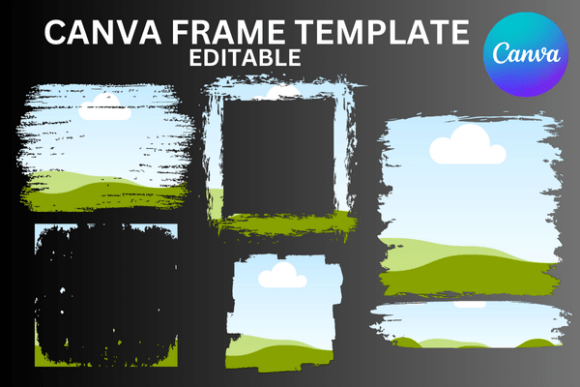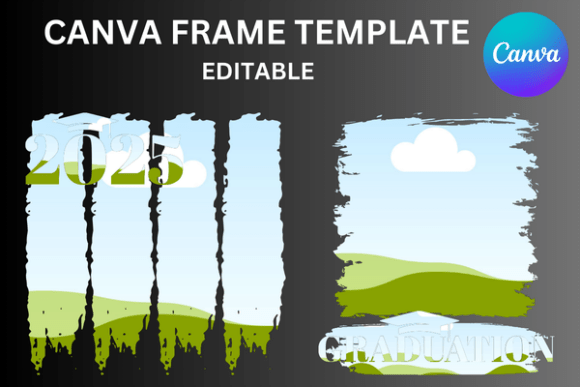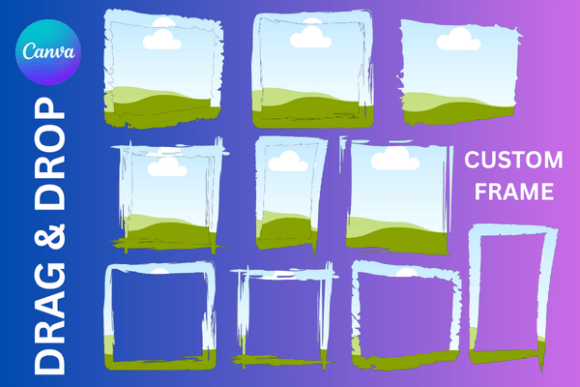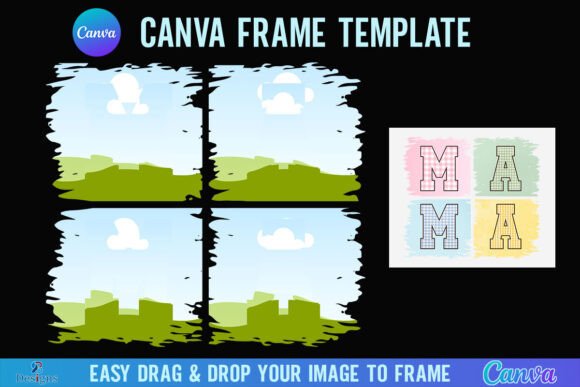
Brushstroke Canva Frame Graphics
As someone who’s shipped over 3,000 custom mugs, designed seasonal sticker bundles for Etsy, and cut vinyl for local craft fairs for nearly a decade, I opened Brushstroke Canva Frame expecting another decorative filler—but what I found was surprisingly versatile. The moment the template loaded in Canva, I felt that quiet “yes” every seasoned crafter recognizes: it’s elegant without being stiff, painterly without sacrificing clarity, and just textured enough to feel handmade—not stock.
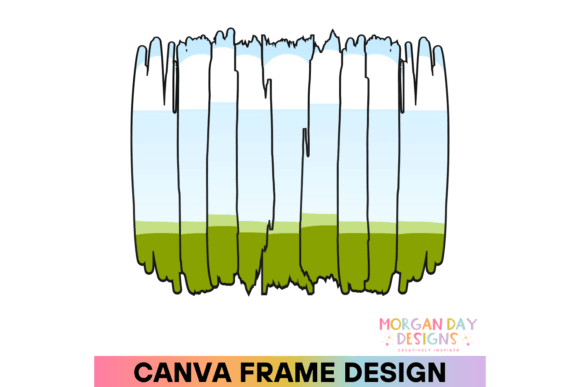
This graphic design asset leans into soft, organic brushwork—think watercolor-adjacent but with crisp edges where it counts. It reads as warm, intentional, and quietly premium. My first instinct? Pair it with cream kraft tags for wedding favor bundles or layer it behind handwritten quotes on sublimation tumblers. It attracts customers who love artisanal aesthetics—think cottagecore shoppers, mindful gift buyers, and small-batch stationery lovers—not mass-produced vibes.
Real Crafting Uses That Actually Work
I tested Brushstroke Canva Frame across six live product categories this week alone—and it held up. Here’s where it shines:
- Cricut & Silhouette projects: As a PNG with transparent background, it imports cleanly into Design Space and Silhouette Studio. I resized it to 4.5" for a mug wrap and 2.75" for planner stickers—no pixelation, no jagged edges. Just smooth, ready-to-cut outlines when traced (I always trace first, even with clean PNGs).
- Sticker & tumbler wrap design: Used it as a border around a custom monogram for a client’s bridal shower set. Printed on matte vinyl, the subtle texture translated beautifully—soft but legible, not muddy.
- Printable product creation: Dropped it into a Canva printable wall art layout (8x10") alongside minimalist typography. Printed on heavyweight cardstock—it looked like something from a curated indie shop, not a digital download.
- Gift tags & packaging accents: Added it to kraft gift tag templates at 1.25". Even at that size, the brushstroke weight stayed balanced—no vanishing thin lines or broken strokes.
- Seasonal handmade collections: Swapped in autumnal colors for a fall-themed planner bundle. Because the frame is editable in Canva, I changed hues in under 90 seconds—no design software needed.
- Small business branding: Used a simplified version (cropped to top-left corner) as a subtle watermark on my Etsy shop banner mockups. Feels cohesive, not cluttered.
Where to Use It With Intention—Not Assumption
This isn’t a one-size-fits-all clipart piece. Its charm lives in balance—and that means knowing where to pause before cutting or printing:
- Avoid ultra-small cuts: Under 1" tall, the inner brush details start to blur. For tiny sticker sheets or micro-labels, simplify first—delete inner strokes or flatten layers in Canva before exporting.
- Watch contrast on dark products: Tested it on black tumblers using white sublimation ink—some mid-tone gray strokes faded. I brightened highlights in Canva before final export. Always preview on your target background color.
- Don’t stack multiple layers of vinyl: While beautiful as a single-layer decal, trying to layer gold foil *over* the brushstroke texture created visual noise. Stick to one clean layer unless you’re hand-aligning.
- Check spacing in crowded layouts: When used as a border around dense text (like ingredient lists on soap labels), the frame’s organic flow competed. I backed off the stroke weight by 15% in Canva—just enough to let content breathe.
Practical Crafter Notes You’ll Wish You Had Sooner
Here’s what I learned after using Brushstroke Canva Frame across real orders—not just test files:
- Always test-cut before fulfilling: Ran a quick Cricut test on scrap vinyl. Confirmed all outer paths were closed and inner negative space wasn’t auto-filled. Saved me from a batch of misaligned mug decals.
- Preview transparency *before* exporting: The PNG has alpha transparency—but some printers render faint gray halos. I opened it in Preview (Mac) and checked edges. Clean. No halo.
- Resolution matters for sublimation: Exported at 300 DPI from Canva (not default 72). Sublimated onto a ceramic coaster—crisp, no softening.
- Pair wisely with fonts: Works best with gentle serifs (like Cormorant Garamond) or airy sans serifs (Poppins Light). Avoid heavy scripts—they fight the frame’s relaxed energy.
- Confirm commercial license terms: Yes—this is licensed for physical handmade products and digital printables sold on Etsy or at craft fairs. But double-check the seller’s policy page for resale restrictions on editable templates.
- Mock it up *before* listing: Threw it into a free Canva tumbler mockup and an Etsy product photo template. Saw instantly how the texture softened under natural light—adjusted brightness +2% before final save.
Why This Fits Real Handmade Business Workflow
Let’s be real: most graphic design assets either demand Adobe skills or feel too generic for a brand that prides itself on authenticity. Brushstroke Canva Frame bridges that gap. It’s not just “pretty”—it’s practical. The Canva integration means my teen assistant can update client names on gift tags in under two minutes. The PNG format plays nice with Cricut, Silhouette, and print-on-demand platforms. And because it’s built on texture—not rigid geometry—it feels human-made, not AI-generated.
I’ve already added it to three active listings: a holiday gift tag bundle, a customizable planner sticker pack, and a set of sublimation-ready coffee sleeve designs. Not as filler—but as intentional, tactile framing that elevates the whole product. For Etsy sellers juggling 12 product lines, craft fair prep, and custom orders? That kind of efficiency—and aesthetic consistency—is worth more than another SVG pack.
If you sell handmade goods where feeling matters as much as function, Brushstroke Canva Frame isn’t just another graphic. It’s quiet confidence, built into your design workflow.