Bulldogs Canva Frame Template: Graphics for Authentic Local Branding
As a brand designer who’s developed visual identities for over 40 local businesses—from artisanal candle studios in Asheville to family-run bakeries in Portland—I recently evaluated the Bulldogs Canva Frame Template for a real-world project: rebranding “Mud Pup Bakery,” a neighborhood sourdough and biscuit shop with bulldog-themed branding (yes, their mascot is a grumpy-but-lovable English bulldog named Biscuit). What stood out immediately wasn’t just its charm—but how thoughtfully it bridges playful personality with functional design utility.
A Warm, Handcrafted Vibe—Not Just Another Clipart Frame
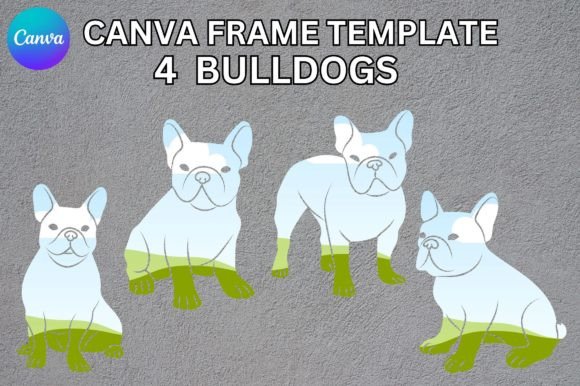
The Bulldogs Canva Frame Template lands with grounded warmth. It’s not overly ornate, nor is it sterile or generic. Think hand-drawn confidence: bold outlines, slightly uneven curves, and subtle texture that reads as tactile—not digital. It suggests a brand that’s friendly, confident, and proudly handmade. It leans into rustic-modern rather than luxury-minimalist, making it ideal for food businesses, skincare brands using natural ingredients, florists, children’s product lines, and boutiques with strong local character. It doesn’t feel premium in a glossy corporate sense—but it *does* feel trustworthy, human, and memorable.
Where This Graphic Design Asset Earns Its Keep
In practice, the Bulldogs Canva Frame Template shines where small business branding needs both structure and soul:
- Product labels and packaging accents—It wraps beautifully around jar lids, soap tags, and bakery bag seals without overwhelming ingredient lists or certifications.
- Thank-you cards and hang tags—Its frame creates instant visual hierarchy, letting handwritten notes or short brand messages pop inside a consistent, ownable shape.
- Social media graphics and seasonal campaign visuals—Whether it’s a “Pumpkin Spice & Bulldogs” fall promo or a “Biscuit’s Birthday Bake Sale” Instagram story, the frame adds cohesion across posts without demanding custom illustration each time.
- Printable inserts and menu graphics—Used subtly behind pricing or specials, it reinforces brand identity while keeping readability intact.
- Product mockups—When placed over realistic packaging renders (like kraft paper bags or matte ceramic mugs), it grounds the design in authenticity—not stock-art detachment.
Real Business Impact: Beyond Aesthetics
This isn’t just decoration. Used intentionally, the Bulldogs Canva Frame Template supports measurable brand outcomes:
- Stronger first impression—Customers scanning a farmers’ market stall or boutique shelf recognize Mud Pup’s packaging instantly, even before reading the name.
- Better product recognition—Consistent framing across stickers, labels, and social posts builds mental shortcuts in customers’ minds.
- Clearer visual hierarchy—The frame naturally directs attention to key information: flavor names, limited-edition badges, or “Locally Baked Daily” callouts.
- More consistent brand identity—Small teams without full-time designers can maintain alignment across printed and digital touchpoints.
- Improved customer trust—Thoughtful, cohesive visuals signal care and professionalism—even for bootstrapped handmade businesses.
Smart Usage Zones—and Where to Pause
The Bulldogs Canva Frame Template works best when used as a *supporting graphic design asset*, not a crutch. It excels in:
- Decorative brand elements on packaging fronts and backs
- Hero graphics for website banners or in-store signage
- Seasonal packaging accents (e.g., wreath-integrated frames for holiday cookie boxes)
- Boutique visuals like receipt stamps or loyalty card borders
- Social media campaign graphics where tone and recognizability matter more than precision
Use it carefully—or avoid it—in contexts where clarity, minimalism, or regulatory compliance takes priority:
- Formal corporate branding (e.g., law firms or financial advisors)
- Very small product labels (<5 cm width) where detail blurs or text gets crowded
- Packaging dominated by legal text, nutrition facts, or ingredient-heavy layouts
- Backgrounds with low contrast (e.g., light gray on white), where the frame’s outline may vanish
- Luxury-minimalist brands relying on negative space and restrained typography
Practical Brand Designer Notes You Can’t Skip
Before committing this Canva template to client work or physical production, run these checks:
- Test it on real packaging mockups—not just Canva previews—to assess scale, spacing, and print legibility.
- Check black-and-white usage: Does the frame retain definition when converted to grayscale? Crucial for cost-effective printing.
- Preview it at actual label sizes (e.g., 2" x 3") on screen and printed—some details vanish at tiny scales.
- Test it with your brand’s full color palette—not just primary hues. Does it harmonize with secondary tones and neutrals?
- Compare it side-by-side with competitor packaging. Does it stand out—or blend in?
- Review PNG transparency: Is the background truly transparent? Are edges crisp, or slightly aliased?
- If SVG is included, confirm vector editability—can you adjust stroke weight or simplify paths for cleaner printing?
- Test it beside your brand fonts: Does it complement serif body copy? Support sans-serif headlines? Add warmth next to script or handwritten styles?
- Verify commercial licensing—especially if designing for clients or selling physical goods. Not all creative marketplace assets permit resale or product labeling use.
Final Thought: A Tool That Serves the Brand, Not the Other Way Around
The Bulldogs Canva Frame Template isn’t a logo design solution—it’s a flexible, expressive graphic design asset that strengthens small business branding when aligned with authentic voice and thoughtful execution. For Mud Pup Bakery, it became the unifying thread across biscuit bag seals, Instagram story highlights, and seasonal window decals—not because it’s flashy, but because it feels like *them*. In an era where local shoppers choose connection over convenience, that kind of consistency isn’t decorative. It’s strategic. And for handmade businesses, food brands, and creative entrepreneurs building real relationships in real communities, that’s exactly what professional branding should deliver.