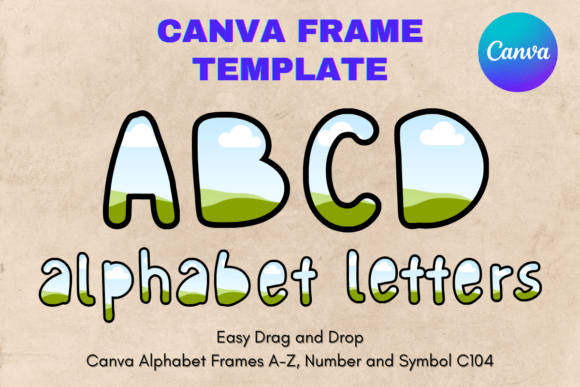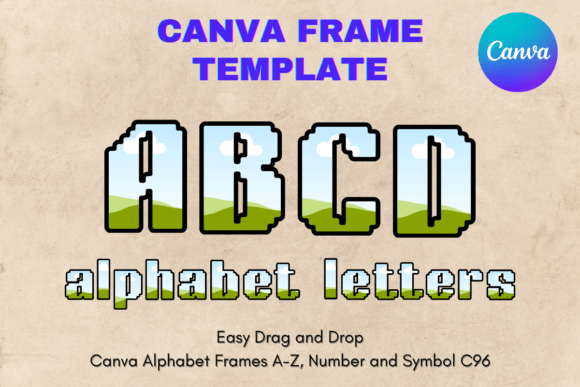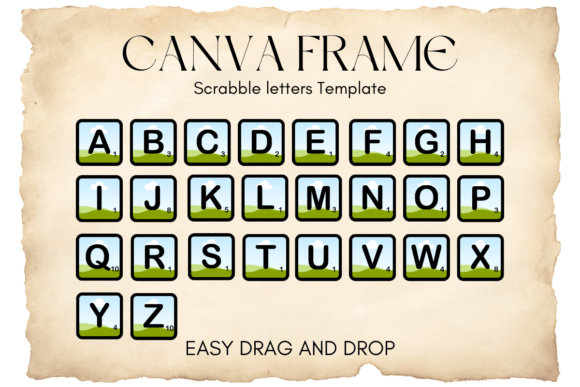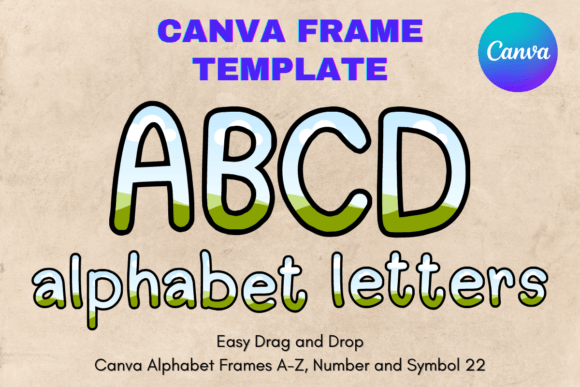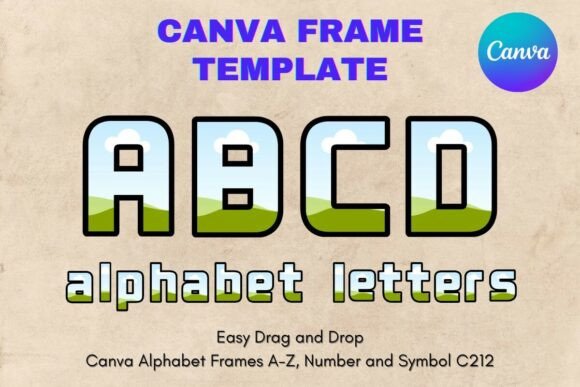
Canva Letters Frame Alphabet Template212
As someone who’s stitched hundreds of custom projects—from monogrammed baby blankets for boutique clients to limited-run embroidered patches for local makers—I opened Canva Letters Frame Alphabet Template212 expecting charm, but not quite the quiet confidence it delivers. This isn’t a flashy, overdesigned alphabet set. It’s clean, gently framed, and thoughtfully spaced—like handwriting you’d want to stitch on a linen tea towel or a soft cotton apron for a kitchen shop.
A First Stitch Test: Tote Bag Edition
Last week, I prepped a batch of canvas tote bags for a small ceramics studio’s holiday pop-up. Their brand voice is warm, intentional, and handmade—not trendy, not minimalist, but *felt*. I dropped Canva Letters Frame Alphabet Template212 into Canva, typed “MAYA” (their founder’s name), and resized it to fit a 4×4 hoop. What stood out immediately was how the subtle frame around each letter gave structure without stiffness—no sharp corners to snag thread, no tight curves that would collapse in satin stitch. It looked like it was made *for* embroidery, not just adapted for it.
Where This Design Truly Shines
- Personalized gifts: Baby onesies, pillow covers, and nursery wall hangings benefit from its gentle scale and balanced negative space—no visual crowding, even with three-letter names.
- Small business merchandise: Think aprons for bakeries, tea towels for coffee roasters, or embroidered patches for indie bookstores. The frame adds polish without demanding high thread count or complex digitizing.
- Etsy listings and craft fair displays: Because it renders cleanly in printable mockups—and looks equally strong on light and dark fabric previews—it builds buyer trust fast. Customers don’t wonder, “Will this look handmade?” They think, “Yes, and it’ll feel special.”
- Holiday and wedding embroidery: The soft framing reads as thoughtful, not fussy—ideal for monogrammed handkerchiefs, linen napkins, or guestbook covers where elegance matters more than impact.
Real Embroidery Considerations—Not Just Pretty Pixels
This is a digital file, not an embroidery file—and that distinction matters. You’ll receive one PDF with a link to Canva templates sized for 8.5×11 paper. That means you’ll need to export your final layout as a high-res PNG or PDF, then digitize it (or hire someone to do so) before stitching. If you’re new to that step, don’t skip it: what looks crisp on screen can blur in fill stitch if corners are too tight or letters too thin.
I tested the lowercase “e” and “a” at 2.5 inches tall on medium-weight cotton twill—using tear-away stabilizer and 40-weight rayon. The inner curve held up well, but the frame’s outer line softened slightly under dense fill. For best results on textured fabrics like terry cloth or fleece, simplify the frame to a single running stitch outline—or go full satin stitch only on the letter itself, leaving the frame as a light echo.
Use With Care: Five Practical Boundaries
- Small hoops (under 3 inches): The frame adds visual weight. At tiny scales, it risks looking muddy. Stick to letters ≥1.75" tall for 3×3 hoops.
- Stretchy or thin fabrics: Knits and lightweight voiles need extra stabilizer support beneath the frame area—otherwise, the outline may ripple or pucker.
- Dark or heavily textured backgrounds: The frame relies on contrast. On charcoal denim or bouclé wool, test thread colors first—navy or charcoal gray thread often reads clearer than black.
- Curved surfaces like caps or hats: The flat, symmetrical framing works best on stable, flat panels. Avoid placing it across seams or deep crowns unless you’re using a cap frame and reducing density by 15–20%.
- Frequent-wash items (baby clothes, kitchen towels): Reinforce the frame’s outer edge with a second pass of running stitch—if digitizing yourself—or ask your digitizer to add light underlay.
What This Means for Your Craft Business
As an Etsy seller or small shop owner, Canva Letters Frame Alphabet Template212 is less about “instant embroidery” and more about *consistent, ownable typography*. You’re not buying a machine embroidery design—you’re buying a flexible, brand-aligned graphic asset. That means you control the color palette, spacing, and context. Want to pair it with a hand-drawn herb icon? Drop it in. Need to layer it over a watercolor wash background for a printable mockup? Done. It supports your voice instead of overriding it.
But here’s the quiet truth: its value multiplies when paired with intention. Don’t just slap it onto a sweatshirt and call it done. Try it with oatmeal linen + ecru thread. Test it on a recycled cotton tote with matte polyester thread. See how it reads next to handwritten price tags or ceramic stamps. That’s where Canva Letters Frame Alphabet Template212 earns its keep—not as decoration, but as a quiet signature.
Designer Notes Before You Stitch
- Always test on scrap fabric matching your final product’s weight and stretch.
- Check thread color contrast in natural light—not just on screen.
- Review stitch density: if digitizing, avoid >12,000 stitches for the full name unless using commercial-grade machines.
- Confirm hoop size compatibility *before* digitizing—especially if planning for caps or curved items.
- Inspect small details at 200% zoom: inner curves, frame thickness consistency, and letter spacing uniformity.
- Test black-and-white mockups to assess clarity on both light and dark backgrounds.
- Use appropriate stabilizer—cutaway for knits, tear-away for stable wovens, and fusible for lightweight silks.
- Verify licensing terms directly with the seller: Can this be used in finished products you sell? In digital product previews? In client-branded merchandise?
In short: Canva Letters Frame Alphabet Template212 isn’t a shortcut. It’s a thoughtful starting point—one that rewards attention, respects fabric, and quietly elevates the handmade product without shouting. Use it right, and it won’t just say a name. It’ll say, “This was made with care.”