Car Air Freshener Canva Template
As a designer who’s stitched over 2,000 custom embroidery projects — from boutique baby onesies to Etsy best-selling patches and holiday market sweatshirts — I opened the Car Air Freshener Canva Template expecting something playful but functional. What I found wasn’t just a cute graphic; it was a surprisingly versatile design asset with quiet intention behind its simplicity.
I tested it first on a small-batch run of embroidered cotton tote bags for a local coffee shop’s “Drive-Thru Love” gift set. The idea? Stitch the air freshener motif onto the front pocket as a subtle, nostalgic nod to road trips and morning commutes — not literal car decor, but a warm, handmade wink at everyday rituals. That’s where this template shines: it doesn’t shout. It invites.
A Shape That Stitches Well — Not Just Looks Good on Screen
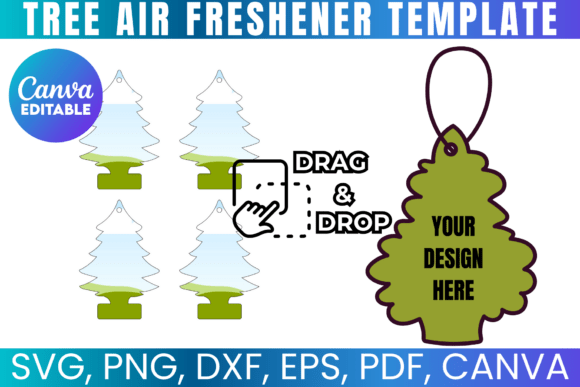
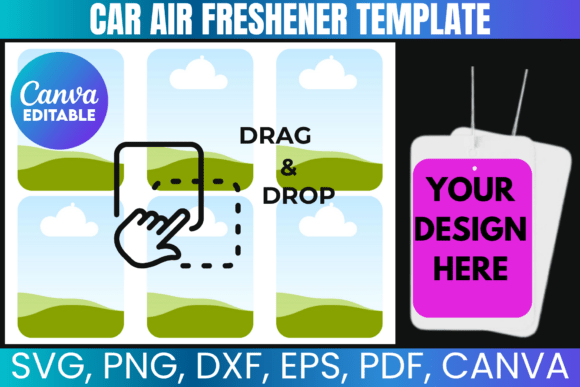
The outline is clean and confident — rounded corners, balanced negative space, and a gentle curve that mirrors real air freshener shapes without rigid symmetry. That matters. In machine embroidery design, too much symmetry can read stiff or artificial; too much asymmetry risks distortion when hooped. This one lands in the sweet spot: easy to center, forgiving on slightly uneven fabric pulls, and naturally scalable down to a 3-inch hoop without losing legibility.
It’s built for clarity, not clutter. No tiny icons inside the shape, no intricate borders or micro-lettering — just a bold, open silhouette with room for personalization. That makes it ideal for embroidered patch production, especially when you’re layering it onto denim aprons or canvas pillow covers. I ran it as a satin-stitch border with a soft fill stitch interior (in mint green thread), and it held crisp edges even on medium-weight twill.
Where It Fits — And Where It Doesn’t
This isn’t a standalone logo or a complex applique design. It’s a design asset — a thoughtful blank canvas, literally and figuratively. It works beautifully on:
- Tote bag designs — centered on the front panel or subtly tucked into a corner
- Sweatshirt embroidery — left chest placement feels modern and low-key
- Baby embroidery — paired with a soft script font (“My First Road Trip”) on a knit onesie
- Holiday embroidery — filled with red-and-green thread for a cozy stocking stuffer tag
- Small shop product — printed as a printable mockup for your Etsy listing, then stitched on tea towels or kitchen aprons
But be thoughtful about context. On stretchy fabric, like ribbed baby caps or performance tees, you’ll need cutaway stabilizer — the shape’s smooth curves don’t self-support like angular motifs do. On dark fabric, avoid light thread unless you’re using high-contrast underlay; the open interior needs definition. And skip it for curved surfaces like structured baseball caps — the flat, centered layout doesn’t adapt well to crown curvature without significant redesign.
What It Adds to Your Finished Product — Beyond the Stitch
Customers notice feeling before detail. This template carries a quiet, approachable charm — friendly but not childish, retro but not dated. When used on a personalized gift (say, a linen pillow cover for a new driver), it reads as intentional, not generic. That builds customer trust and elevates perceived product value. It doesn’t scream “handmade” — it whispers it, confidently.
For Etsy sellers and craft business owners, that subtlety is gold. It fits cleanly into brand palettes — swap thread colors to match your shop’s aesthetic, and it disappears into your line while still feeling distinct. No competing with loud typography or busy patterns. It supports your voice instead of overriding it.
Practical Embroidery Designer Notes Before You Stitch
Before adding Car Air Freshener Canva Template to your next project, here’s what I do — every time:
- Test on scrap fabric first — especially if using textured weaves or blends. That smooth shape can blur on heavy slubs or loose knits.
- Check thread color contrast against both light and dark backgrounds. A single-color version often reads better than multi-tone fills on small items.
- Review stitch density — if your embroidery software shows heavy fill areas, consider simplifying to a lighter fill stitch or open satin outline only.
- Confirm hoop size compatibility. While it scales well, avoid pushing below 2.5 inches without visual verification — corners may soften.
- Inspect small details in black-and-white mockups. Does the shape retain personality without color? (It does — which is rare and valuable.)
- Use proper stabilizer: tear-away for stable cottons, cutaway for knits or lightweight linens.
- Verify licensing before selling finished items or digital products. Since this is labeled a Canva Graphics file, confirm commercial use rights directly in Canva’s license terms — especially if bundling with other design assets.
One final note: this isn’t a plug-and-play embroidery file out of the box. It’s a template — meaning it lives in Canva first, then moves to your embroidery workflow. That gives you flexibility (resize, recolor, layer text) but also responsibility. Don’t assume auto-digitizing will honor its balance. If you’re sending it to a digitizer, point out the intentional openness — ask them to preserve breathing room, not overfill.
In short: the Car Air Freshener Canva Template is a quietly capable tool. It won’t carry your entire collection, but it’ll elevate your best small-batch pieces — the personalized gifts, the boutique merch, the handmade details that make customers pause and smile. Use it with intention, test with care, and let its simplicity do the talking.