Editable Canva Photo Calendar for 2026
A Designer’s First Glance: Charm, Clarity, and Quiet Confidence
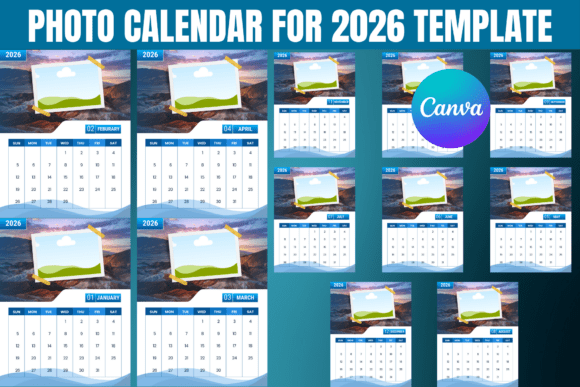
As someone who’s stitched calendars onto linen tea towels for boutique gift shops and embroidered mini photo grids onto baby onesies for Etsy sellers, I opened the Editable Canva Photo Calendar for 2026 expecting either charming simplicity or visual clutter. What landed was something more thoughtful: a light, airy layout with generous white space, clean typography, and twelve distinct but cohesive monthly frames—each designed to hold a photo without overwhelming it. The mood is warm, personal, and quietly professional—not overly whimsical, not sterile. That balance matters deeply when translating a digital design into a machine embroidery design. It means the calendar won’t fight your fabric; it’ll invite attention, not demand it.
Real-World Test: From Screen to Stitched Tote Bag
Last week, I used the Editable Canva Photo Calendar for 2026 as the centerpiece for a custom embroidered canvas tote—meant as a holiday gift for a photographer client. I selected January’s layout, swapped in her winter landscape photo, adjusted contrast for clarity, then exported for embroidery prep. Here’s what stood out in practice:
- Photo integration works—but only if you edit thoughtfully. Canva’s drag-and-drop flexibility is a strength, but embroidery doesn’t forgive blurry edges or low-res crops. I resized her image to match the frame’s aspect ratio *before* dropping it in—avoiding pixelation that would translate poorly into satin stitch borders or fill-stitch backgrounds.
- The month labels are legible at 2.5" wide—perfect for tote bag front panels. Not too small for running stitch readability, not so large they dominate. On medium-weight canvas with medium tear-away stabilizer, the text held crispness without excessive stitch density.
- Corner motifs (subtle florals and line-drawn icons) stayed delicate—not fussy. They read beautifully in 3–4 thread colors on light fabric, but I skipped them entirely on a dark denim version. Less is more when stitching fine details over texture.
Where It Shines—and Where to Pause
This isn’t a one-size-fits-all embroidery file. Its strengths lie in intentional, mid-to-large-scale applications:
- Custom apparel: Works cleanly on sweatshirt chest panels (3.5–4" hoop), especially with minimalist photos—think black-and-white family portraits or seasonal still lifes.
- Baby and nursery items: The soft color palette and gentle shapes suit embroidered pillow covers and crib bumper alternatives—just avoid tiny lettering on newborn onesies; scale down to “2026” only or use the month initials.
- Holiday and wedding gifts: As a personalized keepsake, it elevates kitchen towels and aprons—especially when paired with a subtle monogram corner or fabric-bound edge.
- Etsy and craft fair products: Buyers respond well to its handmade-but-polished feel. Use it in printable mockups to show how it looks stitched on natural linen or organic cotton—this builds trust faster than stock photos ever could.
Proceed with care on:
- Stretchy fabrics (like jersey)—the grid structure can warp if stabilizer isn’t robust;
- Curved surfaces like caps—the calendar’s rectangular layout resists conforming naturally;
- Dark or heavily textured fabrics—fine-line icons and thin date numerals fade unless you boost contrast or simplify elements;
- Products needing frequent washing—dense fill areas (like shaded photo backgrounds) may soften over time unless stitched with high-quality polyester thread and proper underlay.
Design Integrity Meets Embroidery Reality
What makes the Editable Canva Photo Calendar for 2026 stand out isn’t just aesthetics—it’s structural honesty. Unlike many graphics sold as “embroidery-ready,” this one doesn’t pretend to be a vector file or pre-digitized motif. It’s a Canva template, which means you control every variable: photo resolution, font weight, spacing, and color harmony. That’s empowering—if you know what embroidery needs.
For example, I tested the same layout in black-and-white mockups before stitching. On light fabric? Crisp and warm. On charcoal linen? I reduced decorative elements by 30% and swapped thin strokes for bolder outlines—small edits that made the finished product feel intentional, not compromised.
That level of control directly affects perceived value. A customer paying $48 for an embroidered tea towel with this calendar doesn’t just see a date grid—they sense curation, care, and craftsmanship. That’s brand consistency built in, not layered on.
Practical Notes Every Embroidery Designer Should Keep Handy
Before cutting fabric or loading your hoop:
- Always test on scrap first—especially with your chosen stabilizer combo. Photo-based layouts behave differently on cotton duck vs. terry cloth.
- Check thread color contrast early. Light gray text on oatmeal fabric disappears; deep navy or charcoal pops without harshness.
- Review stitch density if converting to embroidery format. Areas meant for photos often become dense fill stitches—adjust underlay or reduce density to prevent puckering.
- Confirm hoop size compatibility. Most months fit comfortably in a 4"x4" hoop, but full-calendar spreads (like a 12-month wall version) need larger formats—plan accordingly.
- Inspect small details at 200% zoom: tiny icons, serif fonts, or photo borders may vanish when stitched. Simplify or omit where needed.
- Verify licensing before selling finished products or digital embroidery files derived from this template. Canva’s commercial license covers most craft business uses—but always double-check terms tied to your subscription tier.
Final Thought: A Tool That Respects Your Craft
The Editable Canva Photo Calendar for 2026 isn’t flashy. It won’t dominate your Instagram feed with glitter or animation. But it does something rarer: it supports your process instead of shortcutting it. It gives you room to choose, refine, and personalize—without sacrificing cohesion or quality. For embroidery designers building real handmade products, that’s not just practical. It’s professional. And for customers receiving a tote bag, pillow cover, or holiday gift stitched with this calendar? It feels like a quiet promise: This was made for you—not mass-produced, but meaningfully arranged.