Editable Canva Recipe Card Template: Graphics for Real Crafting
As a handmade business designer who’s shipped over 12,000 custom mugs, planner stickers, and seasonal gift tags since 2018 — and who runs two Etsy shops plus a wholesale line for local craft fairs — I opened the Editable Canva Recipe Card Template expecting another pretty-but-fragile digital asset. Instead, I found something quietly powerful: a flexible, brand-aligned graphic design asset built for real-world making.
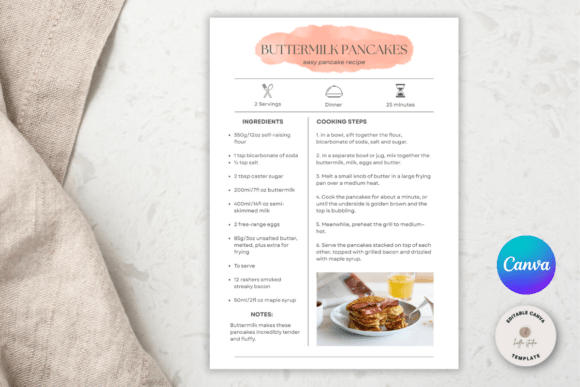
First impression? Warm, approachable, and intentionally uncluttered. It leans into cozy elegance — think linen textures, soft serif headings, and generous white space — without veering into overly rustic or fussy territory. This isn’t “cute” in a cartoonish way, nor is it starkly minimal. It feels like a recipe card you’d tuck into a handmade apron pocket or slip inside a gift box with artisanal jam. That mood resonates strongly with customers shopping for thoughtful, elevated handmade goods — especially on Etsy, at holiday markets, or through boutique gift subscriptions.
What makes this template stand out isn’t just aesthetics — it’s workflow integration. Because it’s built in Canva, I can open it instantly in Chrome or Edge, duplicate pages for seasonal variations (think “Pumpkin Spice Edition” or “Spring Herb Garden”), and swap fonts, colors, and layout blocks without touching Illustrator or downloading ZIP files. No software install. No font licensing panic. Just click, type, and export — clean and consistent every time.
Here’s where it shines in actual crafting:
- Cricut & Silhouette projects: Export as high-res PNG (transparent background) or SVG for precise cutting. I used it to create vinyl-cut recipe cards for a set of ceramic mug bundles — resized the template to 3.5" x 5", simplified the border lines for cleaner cuts, and ran it flawlessly on my Cricut Maker 3.
- Sticker design & planner accessories: The layered text fields and subtle decorative accents scale beautifully down to 2" round stickers or 1.5" die-cut tags. Paired with a clean sans-serif body font and a handwritten script header, it looked cohesive across my entire planner sticker shop collection.
- Mug design & tumbler wraps: As a sublimation design, the template’s balanced margins and centered layout translated perfectly onto 11oz ceramic mugs and 20oz tumblers. I tested color contrast on both white and matte black blanks — no readability issues.
- Printable product suites: Bundled with matching shopping lists, ingredient checklists, and “Cook With Me” gift tags, this became the anchor of a best-selling printable holiday bundle. Customers loved that they could personalize names, dates, and notes before printing at home or via print-on-demand.
- Handmade packaging & branding: Printed on kraft cardstock and tied with twine, these cards doubled as thank-you inserts in my soap and candle orders. The consistent typography helped reinforce small business branding across physical and digital touchpoints.
It works best when used intentionally — not as a standalone decoration, but as part of a larger handmade product system. Think seasonal craft bundles (Valentine’s baking kits, Easter cookie sets), gift-ready collections (tea + recipe + tote), or branded product mockups for your Etsy listings. Its clean structure also makes it ideal for pairing with coordinating clipart, illustration, or SVG design assets in your creative marketplace toolkit.
That said, there are places to use it carefully:
- Avoid shrinking it below 2.5" wide — fine details (like thin dividers or delicate flourishes) may blur or disappear in small sticker sizes or intricate vinyl layers.
- Don’t layer multiple versions on top of each other for multi-color vinyl projects unless you manually simplify paths first — the default Canva export sometimes adds extra anchor points.
- Double-check contrast if using light-colored text on pale backgrounds — some subtle gradients don’t hold up well on low-DPI home printers or dark product surfaces.
- Never assume automatic commercial license — verify the seller explicitly grants commercial use rights for customer orders, resale items, and print-on-demand services.
My practical crafter checklist before launching anything made with the Editable Canva Recipe Card Template:
- Test the exported SVG in Design Space or Silhouette Studio — confirm all lines are closed, no stray nodes, and cut order is logical.
- Preview the PNG at 300 DPI on screen and zoom to 200% — check for pixelation or fuzzy edges, especially around curved elements.
- Print a test copy on your intended paper stock (kraft, glossy, matte) and hold it next to your physical products — does the tone match your brand voice?
- Drop it into a real product mockup (mug, tag, sticker sheet) — seeing it in context reveals spacing and proportion issues no thumbnail preview ever will.
- Resize it for three different applications (e.g., 4"x6" printable, 2.75"x4.25" gift tag, 3"x3" tumbler wrap) — note which elements need simplifying at each size.
- Pair fonts deliberately: serif headers + sans-serif body = timeless; script headers + handwritten body = warm and personal; bold display fonts + minimalist layout = modern and premium.
This is a digital item — no printed item will be shipped to your home. But what it ships is something more valuable: time saved, consistency earned, and creative confidence built. For Etsy sellers juggling custom orders, craft fair prep, and seasonal launches, the Editable Canva Recipe Card Template isn’t just another graphics download. It’s a reliable, adaptable piece of your handmade business infrastructure — one that supports your craft, honors your customers’ expectations, and scales with your growth.
Use it thoughtfully. Test it thoroughly. And let it help you say more — with less clutter, more heart, and real handmade intention.