Flamingo Canva Frame Template
A Designer’s First Look: Playful, Polished, and Purpose-Built
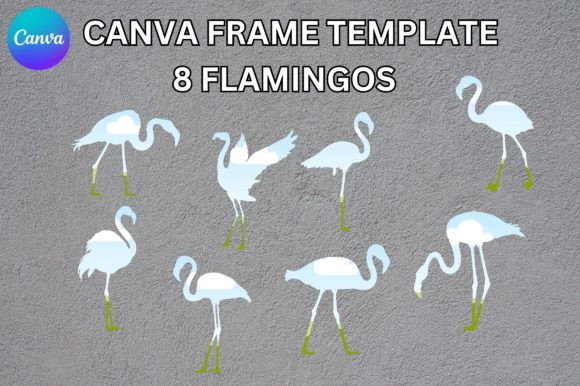
When I opened the Flamingo Canva Frame Template for the first time—dragging it into a fresh Canva canvas—I felt that familiar spark: this isn’t just decoration. It’s a ready-made visual anchor for handmade storytelling. Eight stylized flamingos arranged in a circular frame, clean lines, balanced negative space, and subtle graphic rhythm. It reads as cheerful but not childish, tropical but not kitschy, decorative but not overwhelming. As an embroidery designer who’s stitched hundreds of custom totes, baby onesies, and boutique aprons, I immediately pictured it on a linen tea towel for a bridal shower gift—or scaled down as a delicate chest embroidery on a lightweight cotton sweatshirt.
Where It Shines in Real Embroidery Projects
The Flamingo Canva Frame Template works best when treated as a *foundation*, not a final stitch file. Since it’s a Canva-based graphics template—not a machine embroidery file—it’s ideal for planning, mockups, and client previews before digitizing. I used it last week to design a set of embroidered nursery pillows: I dropped the frame into a Canva mockup of a 12” square pillow cover, adjusted colors to match the client’s blush-and-terracotta palette, then sent that visual to my digitizer. The result? A crisp satin-stitched outer ring with soft fill-stitched flamingos—no guesswork, no misaligned proportions.
It’s especially effective for small business owners selling personalized gifts. Think: monogrammed baby blankets (flamingos framing a name), boutique tote bags (centered above a simple “Hello Sunshine” script), or holiday kitchen towels (paired with a subtle palm leaf border). Because the layout is symmetrical and open, it leaves room for names, dates, or small accents without crowding. For Etsy sellers, that flexibility translates directly to more listing variations—and fewer customer requests for custom resizing.
What to Watch For Before You Stitch
Here’s where practicality kicks in: the Flamingo Canva Frame Template is elegant on screen, but embroidery has physical limits. That graceful curve? It’ll test your hoop size on curved surfaces like caps or baby bonnets—stick to flat, stable fabrics unless you’re confident in your hooping technique. Those slender flamingo legs? They’ll vanish into dense fill stitch if digitized too small. I recommend keeping the full frame at least 4.5” wide for any apparel application—smaller, and leg details blur, corners lose definition, and satin stitch edges fray faster on wash.
Texture matters. On terry cloth towels or heavy denim, the frame’s light graphic weight can get lost. Add a stabilizer layer (cutaway for knits, tear-away for wovens) and consider reinforcing the outer ring with a second outline stitch. On dark fabric? Preview the design in grayscale first—some Canva templates rely on subtle shadows or gradients that won’t translate to thread. Always test on scrap fabric using your actual thread colors. What looks vibrant in Canva may read muddy in navy or charcoal embroidery floss.
Smart Use Cases for Craft Businesses
- Printable mockups: Drop the Flamingo Canva Frame Template into product photos for instant, on-brand Etsy listings—no Photoshop needed.
- Client presentations: Show three color variations (rose gold + white, mint + sand, black + cream) before digitizing—saves revision time and builds trust.
- Boutique branding: Use the frame as a consistent design asset across tags, packaging inserts, and social posts—reinforces recognition without repeating logos.
- Holiday gifting: Pair with seasonal phrases (“Flamingo Fest,” “Beach Baby,” “Tropical Shower”) for fast-turnaround digital embroidery files.
Design Integrity Meets Handmade Value
What sets the Flamingo Canva Frame Template apart isn’t novelty—it’s restraint. Too many “trendy” frames drown in clutter: excessive swirls, overlapping elements, or forced symmetry. This one breathes. That breathing room lets the embroidery itself shine—the sheen of satin stitch on the flamingo outlines, the soft texture of fill stitch in their bodies, the crispness of running stitch for tiny details. Customers notice that polish. A well-proportioned, balanced frame tells them you paid attention—not just to stitching, but to how the finished product feels in their hands.
For craft fair vendors or small shop owners, that perception lifts perceived value. A $38 embroidered apron feels like a keepsake when framed thoughtfully—not just slapped with a logo. And for digital product sellers? This template is a low-risk, high-flexibility asset. Bundle it with coordinating fonts or color palettes, and it becomes part of a cohesive design system—not just a one-off graphic.
Your Practical Checklist Before Digitizing
- Test the Flamingo Canva Frame Template on scrap fabric using your target stabilizer and thread colors.
- Check stitch density in mockups—avoid overloading small areas (like flamingo beaks or wing tips) with dense fill.
- Confirm hoop size compatibility: center the frame so all eight flamingos fit comfortably within your standard hoop.
- Inspect corners and curves in black-and-white mode—ensure contrast holds on light and dark backgrounds.
- Verify licensing terms: this is a Canva graphics template, not an embroidery file—confirm whether commercial use of finished stitched items is permitted.
- Compare side-by-side with your actual digitized version—does the final stitch match the balance and spacing you loved in Canva?
Bottom line? The Flamingo Canva Frame Template isn’t magic—but it is thoughtful design scaffolding. It saves time, elevates presentation, and quietly reinforces professionalism across every handmade product you make. Whether you’re prepping a custom embroidered patch for a local café or building a cohesive line of tropical-themed baby gifts, it’s the kind of asset that works harder than it looks.