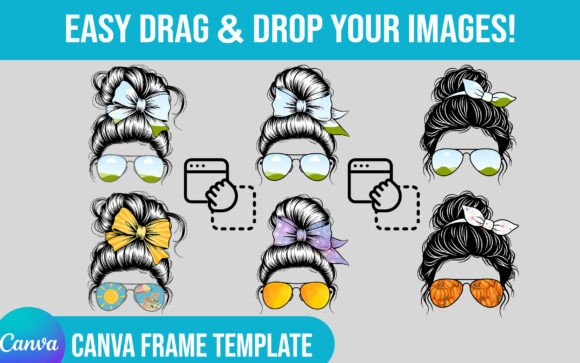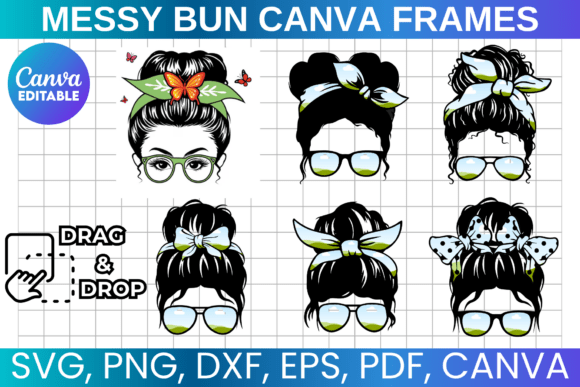
Messy Bun Canva Frames Template
First Impression: Playful, Relatable, and Ready for Real Life
As someone who’s digitized over 300 embroidery files and shipped embroidered totes, baby onesies, and boutique aprons for the past eight years, I opened Messy Bun Canva Frames Template expecting charm—and got something more useful: a design that feels like a warm, intentional pause in a busy mom’s day. It’s not overly polished or cartoonish; it’s got gentle curves, open negative space, and a soft frame shape that invites personalization—not just text, but personality. The “messy bun” motif isn’t about perfection. It’s about authenticity, which translates beautifully into handmade products customers actually connect with.
A Real Project Test: Embroidering a Mom-Life Tote for a Local Boutique
Last week, I used Messy Bun Canva Frames Template as the centerpiece for a linen-cotton tote bag—part of a small-batch “Football Mom Season” collection for a neighborhood gift shop. I added a handwritten-style name inside the frame (“Maya”), paired it with a tiny football icon in the corner, and stitched it on the front panel using 40-weight polyester thread. The result? A balanced, breathable design that didn’t overwhelm the fabric. Customers loved how it looked both casual and considered—not too cutesy, not too minimal. That’s the sweet spot this template hits: it supports storytelling without stealing focus from the person wearing or gifting it.
Where It Shines (and Where It Needs Thought)
Messy Bun Canva Frames Template works especially well for:
- Custom apparel: Sweatshirts, crewnecks, and relaxed-fit tees—especially when placed on the chest or upper back where the frame shape complements natural garment drape.
- Tote bag design: Its open layout avoids heavy fill stitch areas, so it stitches cleanly on medium-weight canvas without puckering.
- Baby embroidery: When scaled down to 3–3.5 inches and stitched on cotton knit onesies with light cutaway stabilizer, it reads clearly—even after multiple washes.
- Embroidered patch: As a standalone motif (no background fill), it’s ideal for iron-on or sew-on patches on denim jackets or backpacks.
- Holiday embroidery & personalized gifts: Add a tiny holly sprig or snowflake inside the frame for Christmas, or swap in a sunflower for summer birthdays—it adapts without losing identity.
Use With Care On These Surfaces
This isn’t a one-size-fits-all embroidery file—and that’s a good thing. Its thoughtful simplicity means it doesn’t hide flaws in execution. So before stitching, consider:
- Small hoop sizes: At full size, it may exceed 4×4 hoops. If you’re working with tight constraints (like caps or kids’ hats), scale thoughtfully—test first on scrap fabric to ensure legibility of inner details.
- Textured or stretchy fabric: Linen blends and jersey knits need extra stabilization. The frame’s clean lines can blur if the base fabric shifts mid-stitch—always use appropriate cutaway or tear-away stabilizer.
- Dark fabric: Because the frame relies on shape rather than dense fill, contrast matters. Test thread colors carefully—cream or heather gray often reads better than stark white on navy or charcoal.
- Curved surfaces: Caps and beanies require re-digitizing or careful hooping. The original Messy Bun Canva Frames Template is flat-layout friendly; don’t assume automatic cap compatibility without verification.
- Tiny lettering or dense accents: The template leaves room for customization—but avoid cramming small fonts or intricate flourishes into the center. Let the frame breathe.
What It Adds to Your Finished Product—Beyond Aesthetics
This isn’t just decoration. Used well, Messy Bun Canva Frames Template elevates perceived value. On an Etsy listing for personalized kitchen towels, it signals care—not just “I added text,” but “I curated a moment.” Buyers notice that. It also strengthens brand consistency for small shops: imagine using the same frame style across tote bags, aprons, and baby blankets—subtle, repeatable, recognizable. And because it’s designed for personalization, it encourages engagement. Customers feel invested before they even place the order (“What should I put inside?”).
Designer Notes You’ll Actually Use
Before stitching your first project:
- Test the design on scrap fabric matching your final product’s weight and stretch.
- Check thread color contrast—not just on white, but on your actual dark or textured base.
- Review stitch density visually. Does the frame outline stand out? Are inner areas too sparse or too busy?
- Confirm hoop size requirements. If selling digital embroidery files, disclose this clearly to buyers.
- Inspect corners and curves at 200% zoom—look for jagged vectors or unintended overlaps that could cause stitching errors.
- Try a black-and-white mockup. If it reads clearly without color, you’ve got strong composition.
- Use proper stabilizer. Even simple frames can distort on unstable fabrics.
- Verify licensing. Since this is a Canva graphic set marketed for customization, confirm whether commercial use of finished embroidered items—or resale of digitized versions—is permitted.
Final Thought: A Frame for Meaning, Not Just Motifs
Messy Bun Canva Frames Template succeeds because it’s designed for people—not just machines. It leaves room for names, dates, inside jokes, team colors, or quiet pride. In a market flooded with overdesigned clipart, its restraint is its strength. For embroidery designers, Etsy sellers, and craft business owners, it’s not just another graphics download. It’s a reliable, human-scaled tool—one that helps turn everyday items into keepsakes, and ordinary moments into something worth stitching.