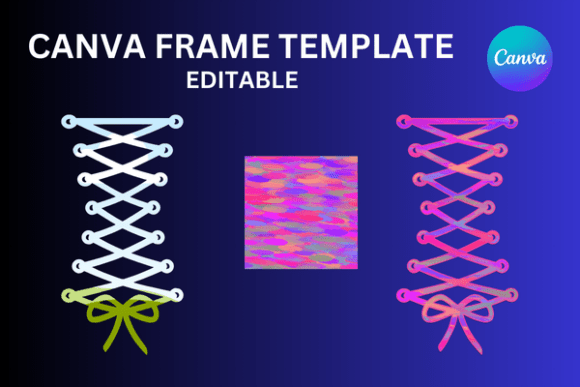
Shoe or Corset Lacing Canva Frame: Editorial Graphics for Polished Content
As a blog designer and digital publisher who’s built over 40 content-rich websites—from lifestyle blogs to niche affiliate publications—I test hundreds of graphic design assets each year. When I first opened the Shoe or Corset Lacing Canva Frame, I paused. Not because it’s flashy, but because it’s intentional. This isn’t just another decorative border—it’s an editorial device with quiet confidence. It evokes craftsmanship, subtle sensuality, and tactile elegance—without veering into cliché. It reads as feminine but not frilly, artistic but not obscure, detailed but not distracting. That balance is rare in stock-style Canva templates.
The lacing motif immediately signals care, structure, and personalization—qualities readers subconsciously associate with trustworthy, well-edited content. It works especially well for niches like slow fashion, mindful wellness, vintage aesthetics, creative entrepreneurship, boutique beauty, and narrative-driven personal development. It also bridges playful and polished: think a Pinterest pin for “5 Journaling Prompts for Intuitive Writers” or a featured image for “How I Built My Digital Product Business in 90 Days.” It doesn’t scream “sale” or “urgent”—it whispers “thoughtful,” which builds reader trust before a single word is read.
Real Publishing Uses That Elevate Reader Experience
In my latest editorial workflow—a 12-part digital guide series on small business branding—I used the Shoe or Corset Lacing Canva Frame across six distinct publishing touchpoints:
- Blog featured images: Framed clean headline text with ample breathing room—no cropping issues on mobile, no loss of lacing detail at scale.
- Pinterest pins: Paired with high-contrast serif headlines; the lacing added visual rhythm without competing with keyword-rich text overlays.
- Newsletter headers: Used as a top-border accent in MailerLite templates—subtle enough to feel custom, strong enough to reinforce brand identity.
- Downloadable resources: Applied to lead magnet covers (e.g., “Brand Voice Worksheet”)—gave printable designs warmth and intentionality, increasing perceived value.
- Social media graphics: Cropped thoughtfully for Instagram carousels—lacing appeared in corners or along one edge, guiding the eye toward CTA buttons.
- Website category thumbnails: Consistently applied across “Resources,” “Templates,” and “Guides” sections—creating instant visual recognition for returning readers.
Why This Graphic Design Asset Strengthens Content Performance
This isn’t just about prettiness—it’s about performance. The Shoe or Corset Lacing Canva Frame improves several measurable aspects of content marketing:
- Stronger first impression: Readers decide in under 3 seconds whether to stay. A cohesive, tactile frame signals quality before they scan a headline.
- Clearer visual hierarchy: The lacing creates natural boundaries—guiding attention to your headline, subhead, or CTA without relying solely on font weight or color.
- Better click-through potential: On Pinterest and email previews, it stands out among flat, template-heavy visuals—especially when paired with warm, muted palettes.
- More consistent branding: Used across blog graphics, social posts, and digital guides, it becomes a quiet signature—like a custom divider or watermark, but more versatile.
- Improved reader trust: Hand-crafted details (even digitally rendered ones) suggest time, care, and authority—critical for affiliate marketing and digital product launches.
Where It Shines—and Where to Proceed Thoughtfully
It excels in hero images, article thumbnails, Pinterest pins, editorial accents, content upgrades, downloadable resources, category visuals, newsletter headers, and social media previews. In these contexts, it adds texture without sacrificing clarity.
Use it carefully in small mobile thumbnails (test readability at 120px height), text-heavy blog graphics (avoid overcrowding), low-contrast backgrounds (the lacing detail can vanish), or busy layouts (it needs space to breathe). It’s less suited for corporate finance blogs, legal resource sites, or ultra-minimalist SaaS brands—unless intentionally juxtaposed for creative contrast.
Practical Publisher Notes You’ll Actually Use
Before deploying the Shoe or Corset Lacing Canva Frame across your site or campaigns, run these checks:
- Preview it on both desktop and mobile—does the lacing remain legible and proportionally balanced?
- Test how it renders as a 150×150px blog thumbnail—does the pattern hold up or blur?
- Drop it into a live blog layout mockup (not just Canva preview)—see how it interacts with real navigation, sidebar widgets, and body text.
- Overlay headline text in multiple weights: bold sans serif, elegant serif, delicate script, and bold display fonts—note where contrast falters.
- Convert to grayscale—does the lacing retain depth and definition? If not, adjust background brightness or add subtle drop shadows.
- Check file size after export—optimize PNGs for web use (under 250KB for hero images); avoid embedding unoptimized PDFs directly on live pages.
- Verify commercial licensing—this is a digital download intended for commercial design use, including monetized blogs, affiliate content, and paid digital products.
This isn’t a one-size-fits-all graphic—it’s a considered editorial tool. When used deliberately, the Shoe or Corset Lacing Canva Frame helps transform generic blog graphics into signature moments of visual storytelling. It supports content that earns attention, invites engagement, and feels worth saving, sharing, or purchasing. For publishers building long-term brand identity—not just chasing trends—it’s a quietly powerful addition to your design assets library.